
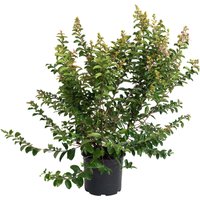
Catawba Crape Myrtle
In stock ✓
Size: #3 Pot
SKU: FLO-CRA-CAT-NA-3G-LGL
Catawba Crape Myrtle lights up sunny spaces with saturated purple flower clusters that hold their color in summer heat. Its large, dark purple flower clusters sit above foliage that emerges with a bronze cast, turns bright green in summer, then finishes orange-red in fall. Botanically named Lagerstroemia indica 'Catawba', this mildew-resistant selection develops a rounded dome that fits well in smaller yards and sunny city gardens. This is our favorite crape myrtle for rich flower color, attractive bark, and a mature size that stays easier to place than the largest varieties.This deciduous shrub or small tree blooms in summer and can continue into early fall with good sun and steady care. Smooth, multicolored bark gives the plant winter character after the leaves drop. Catawba can be trained as a single-trunk tree, a multi-trunk specimen, or left as a large rounded shrub for screening. Use it near a patio, at a sunny home corner, along a driveway, or in a small grouping where the purple flowers can carry the border after spring bloomers are finished.Catawba Crape Myrtle CarePlant Catawba Crape Myrtle in full sun, with 6 or more hours of direct light for the fullest bloom display. It grows in average, well-drained soil, including clay, loam, or sandy soils when drainage is good. A slightly acidic soil pH around 5.06.5 is preferred, though it adapts to many garden soils if they are not extremely alkaline.Water deeply and regularly during the first growing season to help roots move into the surrounding soil. Once established, water during dry stretches when the soil is dry 23 inches down or the newest leaves begin to droop in afternoon heat. Feed in early spring with a balanced slow-release fertilizer.Prune in late winter or very early spring before new growth begins, since flowers form on new wood. Thin young plants to 37 main trunks or canopy branches if you want a tree form, and remove suckers from the base of older plants. Avoid topping; remove dead, crossing, crowded, or inward-growing branches instead.Catawba Crape Myrtle SpacingSpace Catawba Crape Myrtle 1015 feet from buildings, fences, and other large shrubs so the rounded canopy can develop without heavy correction. For a loose flowering screen, plant 812 feet apart, depending on how quickly you want the plants to meet. For containers, use a large 2430 inch planter only for a young temporary specimen before moving it into the ground. In the landscape, pair it with Indian hawthorn for evergreen structure, sea thrift for a low sunny edge, and rosemary for heat-tolerant texture. For a temporary container display, use nemesia and zinnias around the base.